Koprivshtitsa

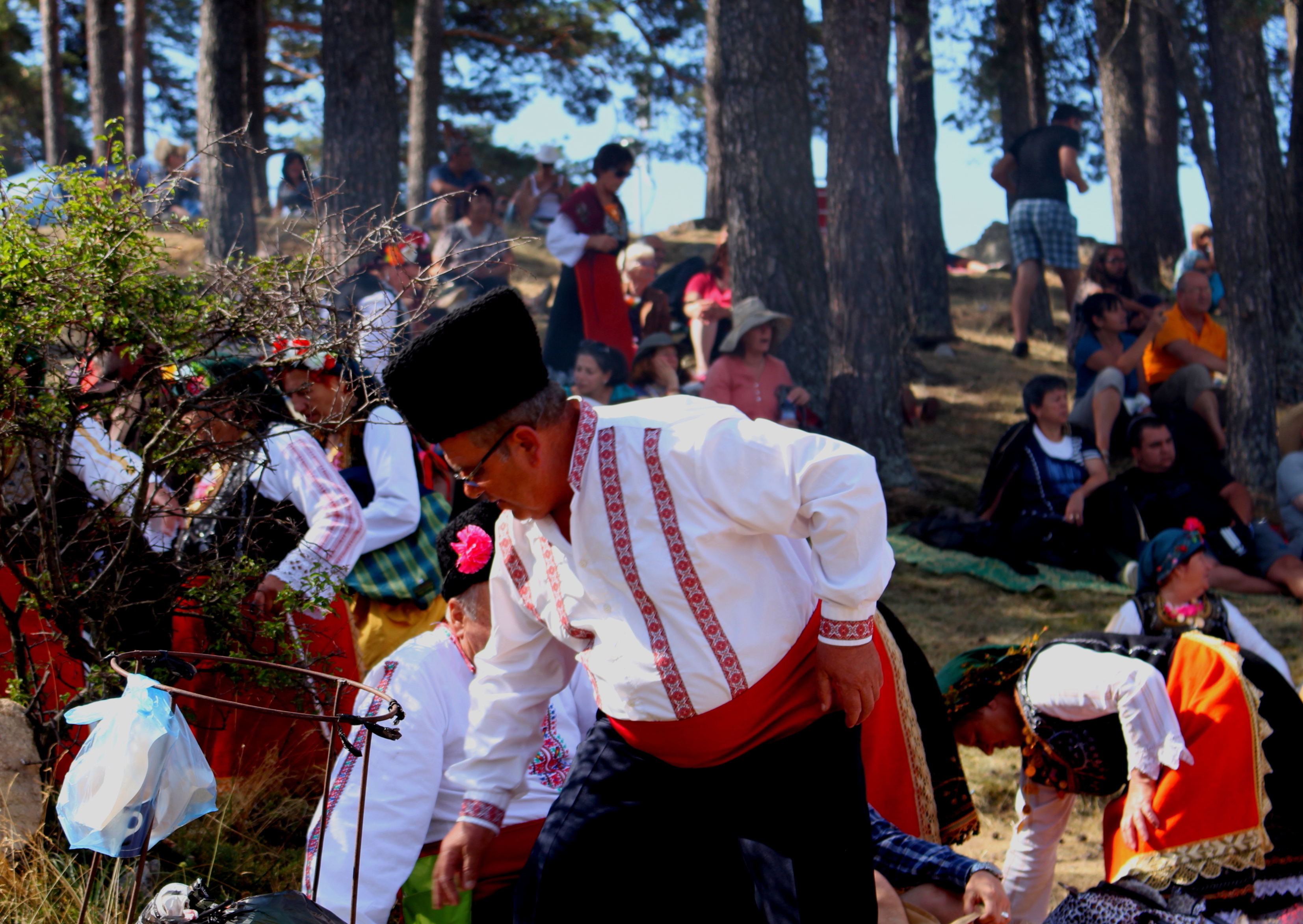
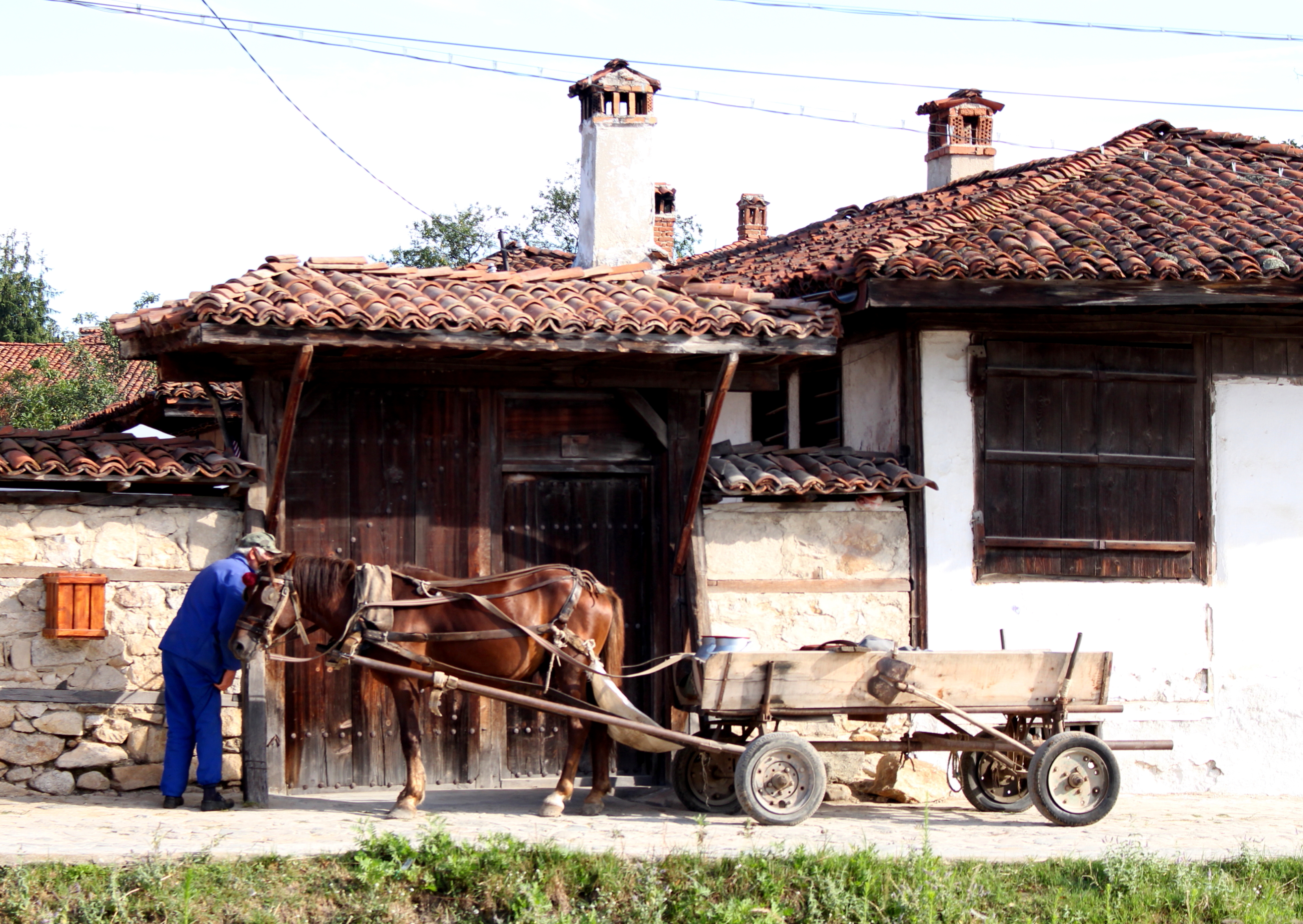
Koprivshtitsa National Folklore Festival happens only every 5 years!  Named after the potent Kopriva (nettle), this seriously charming cluster of stone and wooden houses is nestled in the Sredna Gora mountains, in central Bulgaria.  Renowned for its role in the 1876 uprising, Koprivshtitsa  now opens its valley arms for 3 days and nights, to travelers from all around the country and the globe…

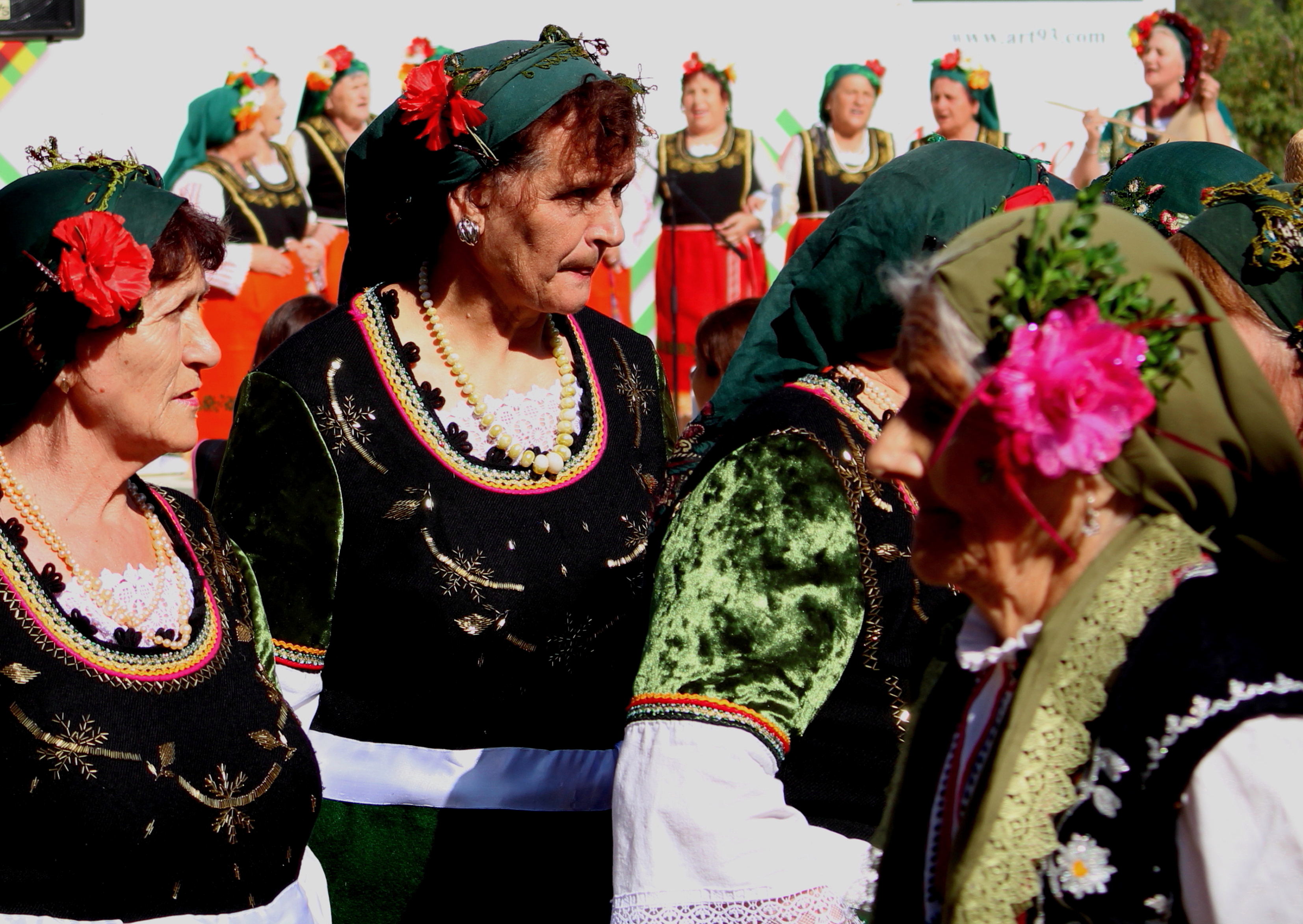
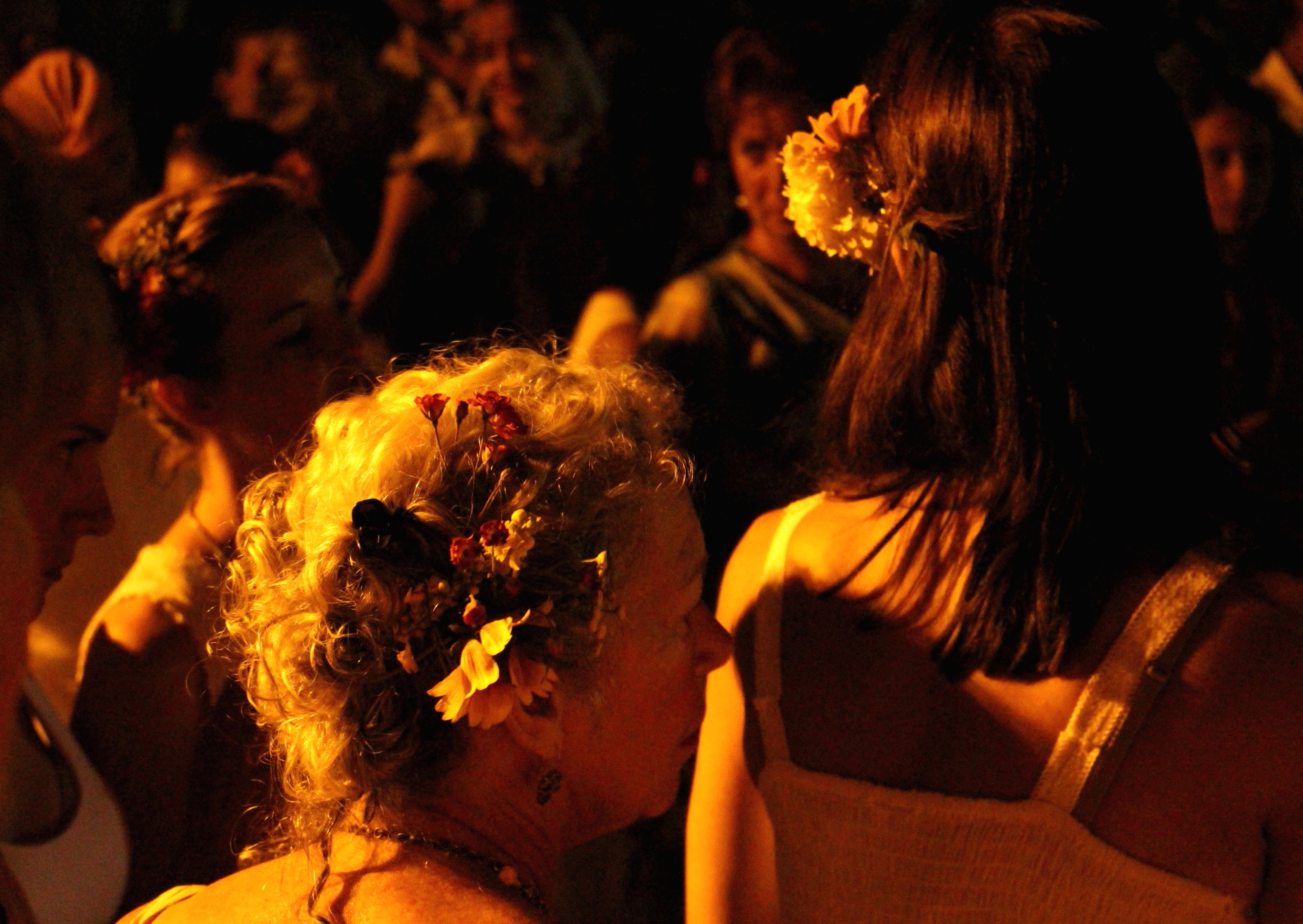
Fleeting impressions for me – in the bustle, in the heat… bus loads of singers, players and dancers from all over the country, come and go. Impressive army tents house these humble magicians, in the fields beneath the village.  Fancifully-retro dressed by day, plain-clothe ninja’s by night.  The best parties happen in the dark, long after the official program has finished, and yet, in broad daylight, flanked by beer sponsored parasols and busy promotional banners, swamped by folk-thirsty admirers in garish modern attire, they always seem to protect and carry the mysterious presence of their ancestors, both in their sound and movement.  Powerful voices break through mediocre PAs, elegant feet fly in bewitching unison over plain concrete slabs, all beneath a heavy blue sky, between the tall pines.

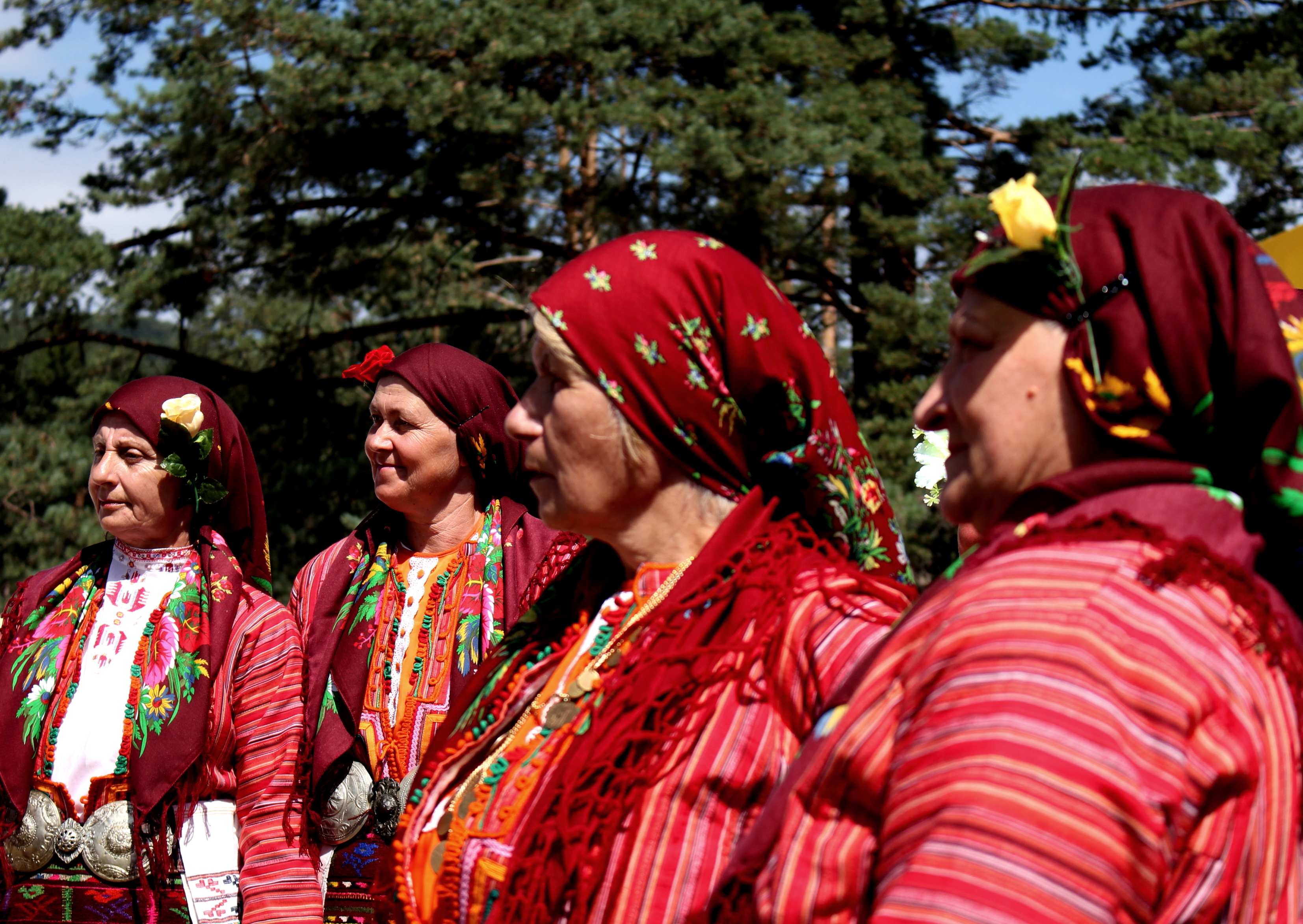
The most beautiful old women you have ever seen, brandish brilliant smiles with single teeth, wear showers of golden coins on their bosom, carry plump roses in their hair, and make their painstaking way up and down the mountain every day, from forest stages to cobbled streets, all in good time, laughing at us travelers, for a reason or two…

 WATCH & LISTEN HERE

hearts 1


Flying

Flying by the seat of one’s pants!!

I learn of the final exam the day before it (my tutor forgot to tell me!?)

Enjoy the perks of lost-in-translation: “see you at 10:30, warmed up” is not “see you at 10:30, to warm up”.  I swoop in, sweaty from the walk, and the panel asks – are you ready?  Why, YES, of course!  Something good told me to warm up at home…

A rocky first verse or two with that husky morning voice – vocal chords a little too loose for the bright timbre required.  Then, I sing my heart out, soaring to the mountains beyond the leaves, through arching phrases, sexy ornaments and cheeky rhythms, through lush floating vowels and cutting consonants, endeavoring to apply everything I have learned this year… all in a few moments, a few couplets, AND with feeling, please!

Today’s offering, offered.

Some tunes require such a delicious balance of strength and suppleness, such a blend of light and dark, that I feel like I am on a tightrope, and in love.  I get that this ‘search’ will last all my life – like ‘the search’ for the perfect wave that surfers devote themselves to, without expecting to, or needing to, actually ever find it… the process itself is the magic.

The luminous smile on my teachers face says she is proud enough.

What a crazy experience.  A whole year singing old folk songs in Bulgarian dialects!  Why does this music and language grow on me like this?  My love and admiration has only deepened… and I feel, somehow, carried by the daily challenge.

Spring Snow

Mother Spoke To The Sun

My first impressions of this voice were mineral: A native copper resonance driving through space. The sedimentary influence of centuries of song. The inner core of a purifying ore, reversing the corrosion of our spirits. A high density alkaline substance with an electrical conductivity that reaches the intelligence of my skin…

If my ears were eyes, they would see flint, glinting on the stream bed. If my ears were hands, they would feel raw ochre, crumbling with gold dusts. And if my ears were tongues, they would taste iron, kale and honey.

Though we work with scores and all these songs are written down for some form of posterity, the living treasure and actual significance comes through only in the human transmission. Week after week, Svetla Stanilova offers her voice, her mana-wahine and her patience – to transmit the tone, the phrasing and the ornaments that will carry our stories, be they of love or war.

Working in the old ochre building (The Yellow School) with its peeling facade and sunny outlook, is a treat. Our gazes plunge down over the roman amphitheater like birds, then out to the Rhodope Mountains beyond, as she sings me Mama na Slwncho Govori (Mother Spoke to the Sun) from nearby Pazardjik… LISTEN HERE

The Yellow School

Conversations with Dora Hristova

I want to share with you some moments gleaned from my conversations with Prof. Dora Hristova, choir conductor of “Le Mystere des Voix Bulgares”. This is the very choir who’s recordings I heard as a child and who’s phenomenal sound planted in my being the dream of one day coming to this land.

The privilege it is for me to study now with Dora H. in her last year at the music academy in Plovdiv, is doubled with a deep gratitude for her willingness to allow me to sit-in on LMVB choir rehearsals in Sofia, every now and again. There, I get to experience the visceral, pungent timbre of these women’s voices first hand, in process, embodied, as it is today. The generations interweave, the political movements are felt. Amongst trials and triumphs, struggles and successes, the single binding factor is this mysterious magnetic vocal style, and when the women sing, everything else falls away…

Dora Hristova BW med

Conductor

– from conversations at Nikolay Haytov Chitalishte and Dora Hristova’s home in March 2015. Features samples from LMVB rehearsals + extracts of the songs “Dva Shopska Dueta” & “Kalimankou Denkou”.

By the Yantra River

A time of change. Though some would say it is always the time of change. The illusion of shapes. The imprint they have on a mind. Pathways worn deep.  Grooves of the assumed – until a landslide, an earthquake, a breakup, occurs. And so we are blessed with the task of release. The lights flashing up off the water already know this. We get to hug trees that stand crooked with their wounds and ever reaching stillness. We get to watch cascades of rubbish mingle with sweet wide waters. We get to see the open plan of a fisherman’s face, the space it has learned from watching water flow. And we get to notice the absence of water, in fact, in the stiff mugs of the city folk. But music is water…

On tour with Kottarashky & The Rain Dogs.  We get to bring loud dense sound, sensual rhythm and calls from the cosmos to underground bars, where youth and youth at heart, throb and drink. We get to drive and drive, and watch winter trees passing by like paper cutouts against the affectionate pressing in of a low sun. We get to forget and remember, and forget again, the people we thought we were, the people we thought we needed. Just the sun now, the thistles, and the wind. The wind, caressing the land, the wind picking the foam up off the waves, the wind coursing through the instruments, that breath moving from mouth to mouth, and back alone.

And through this thing, this music, that passes, we get to die, all together, and we love each other better for it.  One morning, in the old, old town of Veliko Tarnovo, I sang to the Yantra River…

Yantra River


Kukeri

In a small village not too far from Plovdiv, a motley carnival crowd gathers beneath the cold cloud to soak up the transformative energy of the Kukeri.

The men of the village, costumed and masked, wear a belt of clanging copper bells and carry wooden swords, symbols of fertility, with which they may bless your shoulder. Beautiful black hessian hoods in pyramid form are carried high and sometimes come down to shroud the men. They have already been through the houses to chase the evil spirits away and to bring good health, abundant harvest and happiness. Now they dance-walk, encircling the driving solar rhythms of the ‘tapan’ drums and the hypnotic melodies of the ‘zurna’ wind instrument, played by local Romani musicians.

Kukeri

Traditionally performed only by men, today it is a young woman in hidden-heel-bling-sneakers who carries the leading phallus of the parade. Incongruous rubber gorilla masks mingle with the more traditional woolley-horned spirits and some beautifully hand-made colourful cloth masks…

A ritual that was forbidden during the totalitarian years here exudes a rough kind of gusto – tattooed muscle smokes in the back-line, but there is always time for that energetic whacking of peoples backs with an inflated sheep’s stomach, to chase out evil spirits and bring good health!

Further…
https://www.youtube.com/watch?v=cQKFnFAUdHE
https://www.facebook.com/video.php?v=459170877522636&theater

Gyuro, Dobwr Yunak

Of the dozen songs thrown at me in my individual lessons so far, one particularly strikes my gong – Гюро Добър Юнак (Gyuro Dobwr Yunak) from Trakiya region, as arranged by Stoyan Paurov.

Our protagonist lays in a prison tower, a hawk chick in hand. He breaks his own fingers to pieces to feed the bird, he gathers his own tears to water it, to raise it to be able to fly, on his behalf, to get news of his family… the grown bird does fly, but brings back only word of overgrown yards, empty houses and a single dead tree.

This epic piece is travelling me. The ornaments, designed to flip and tumble from steady arching phrases, are like running your fingertips through the longing of calm water, and watching the light break up, flash and ripple out into eternity…

I thought it fitting to sing you some of it in the bathroom of a friend’s atelier, located on the 15th floor of a soviet style block in the Sofia suburbs… a tower indeed. A tower where you will hear the water pipes grinding against the weight of time, as I croon in this language that is not mine, but that teaches me so much about making sound!

LISTEN to “Gyuro in the Tower” HERE

Though scored, the timing of this piece is completely elastic, dictated by the story itself – a breathable rather than beatable meter, meticulously coached by my vocal tutor Svetla Stanilova, and lovely piano accompanist, Maria Akrabova.

For me as a vocalist and as a person, this song is like a supreme challenge to be powerful yet tender, broken yet whole, active yet still, ahead yet present, vast yet concise… A piece I believe I will be working with for years! I sang it for the class, accompanied by Maria, for our end of semester sharing on Wednesday:

LISTEN to “Gyuro for AMTII” HERE

And for the vocal geeks:

Something I am finding particularly interesting is learning how to apply the right impulse and pressure of a particular ornament onto different vowels (depending on the lyric). For example the “ko” from sokolovo that you hear in these recordings, is a particularly loving sound (round yet contained), to apply this pattern to. Later in the song (there are two more cycles), a “te” from da te dwrja, risks splaying and hardening, and requires particular attention to keeping the tongue active, yet lower jaw relaxed and throat open, thus allowing the ornament to percuss freely in the larynx…

My favorite pattern looks like this on the page:

Sokolovo Pattern

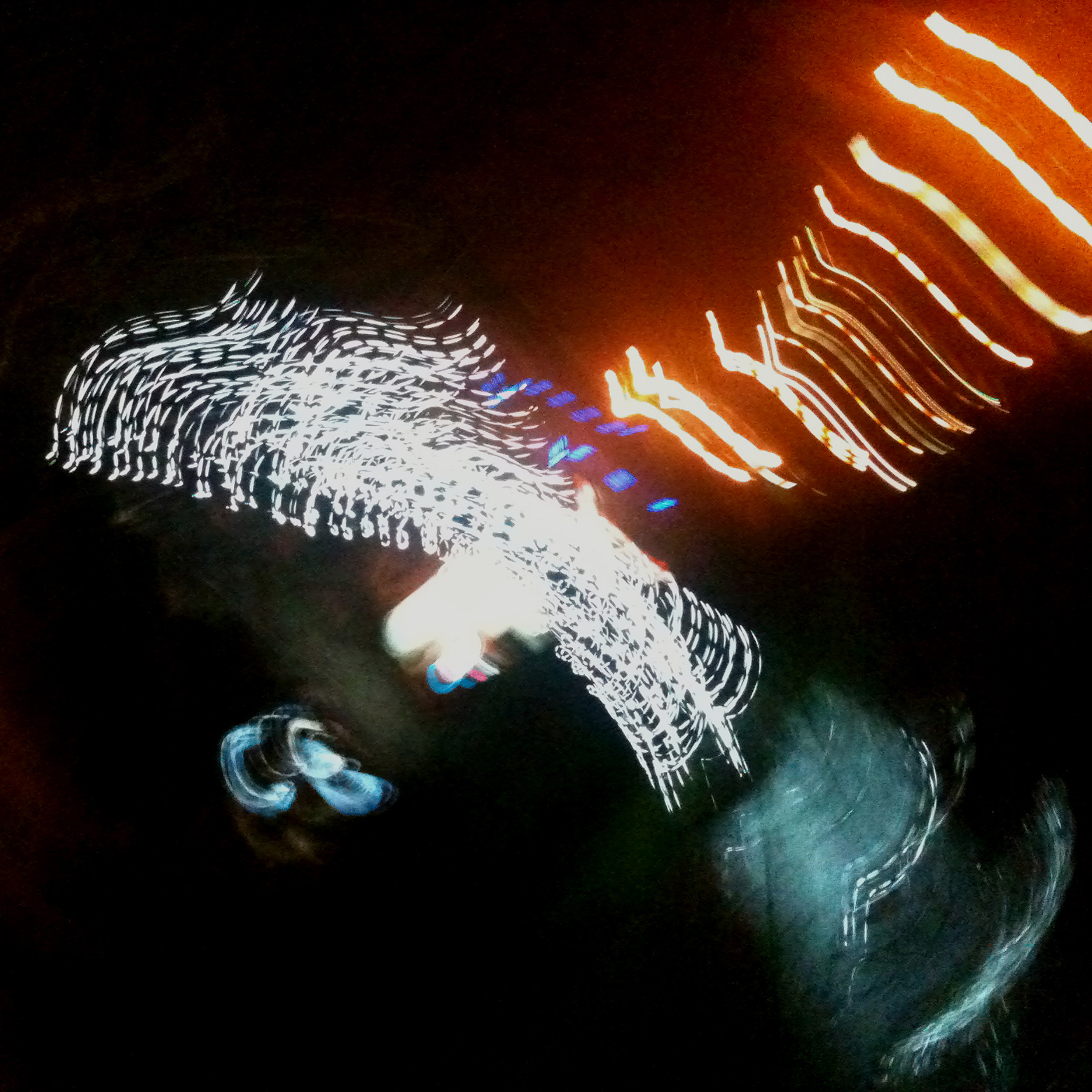
Listen to this, and more, on my sound-cloud below… (ps – that luminous bird you see just appeared in my motion photo experiments… What happens when you dance and click?  Sometimes magic!!)

Blur Bird square

What a song can do…

Tzigani Street

As living bones are steeped in a damp cold and Koleda (Christmas) lights deployed, Plovdiv pedestrian center takes on a new kind of fast-footed, steaming-breath hush… the furtive cats still own the open rubbish bins, glossy people bustle to buy shiny things, while the matt-finish homeless are less visible, hunkering down somewhere else… fake furs speak with real furs, bling boots insult colored berets, and you learn which paving stones you must not step on lest your weight elicit that mini-mud-geyser up your own leg…

One night, in the soft rain, the gravity of a familiar melody drew me around a street corner to encounter two beautifully weathered Tzigani street musicians: teeth missing, bright eyes and all. On accordion and fiddle, fingerless gloves take on a whole new meaning…

Click here to listen!