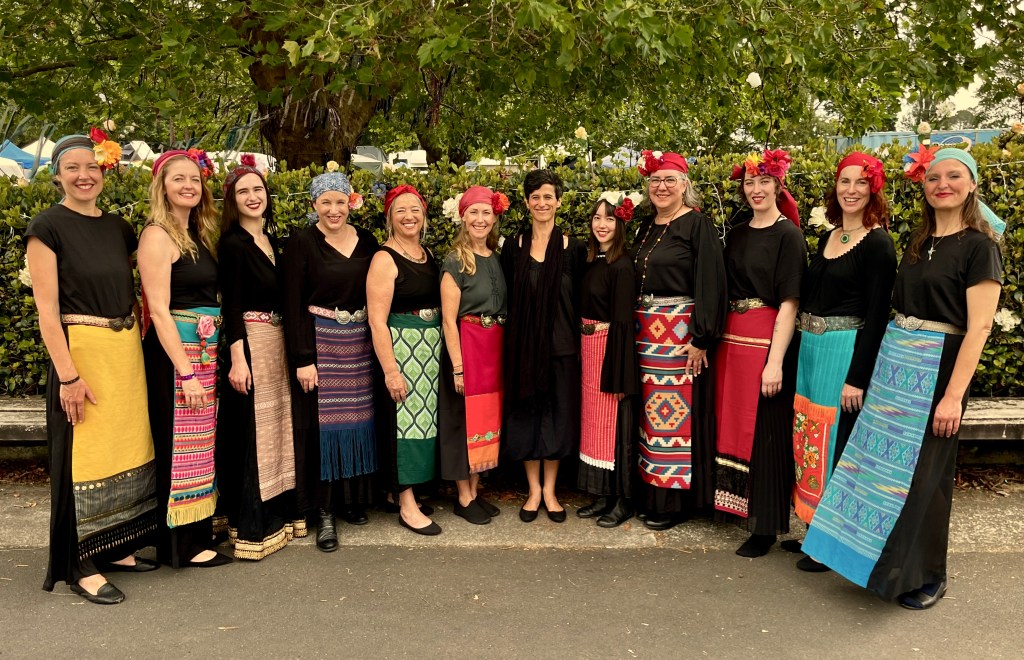
I used to feel at home in Bulgaria. I came back to NZ to nest. After 7 years of absence it felt imperative to return, for the music, and to introduce my 6 year old son to a place that has meant so much to me, alongside a touch down in my birth land, France. How was I to know that the budding collaboration with Vlada Tomova, of Yasna Voices (New York), would catch onto more than half of my singers here in Aotearoa. Early this August eight Medena singers travelled to Bulgaria, to the homeland of the music.
The main aim was to lend our voices to the celebration of a film, and to perform at the Koprivshtitsa Folklore Festival. Along the way we would study with phenomenal vocalists, gathering new ancient repertoire, techniques and inspiration. We would also partake in Vlada’s cultural tour, going deeper into the Rodopi mountains than I had ever been, it what would turn out to be a whirlwind of experiences.
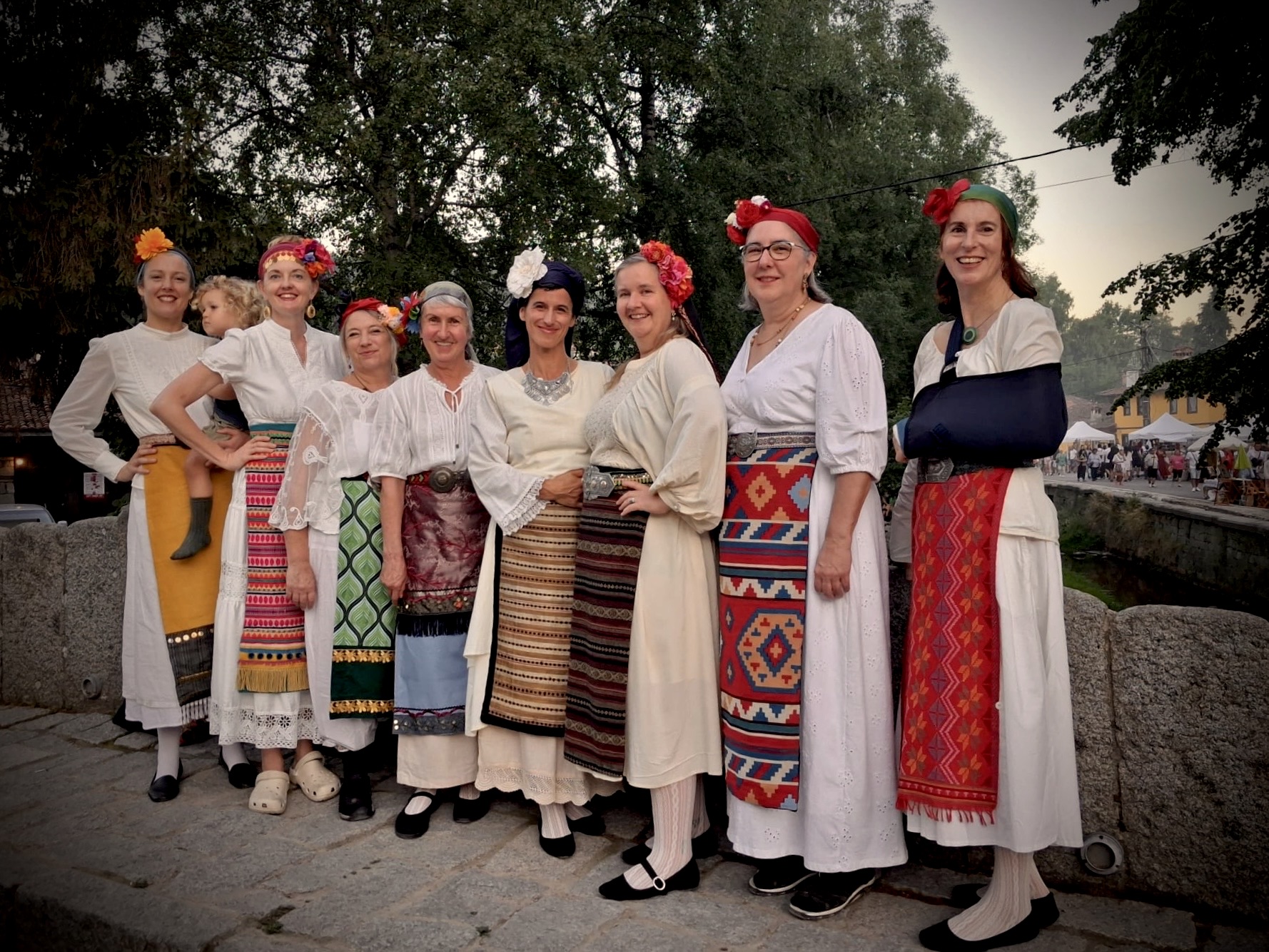
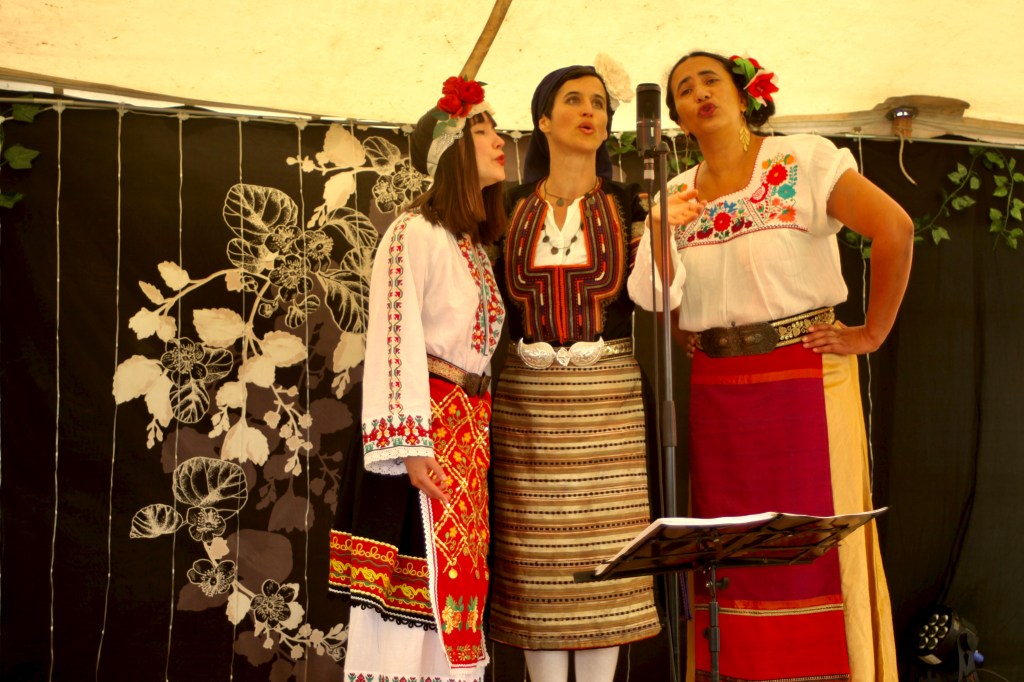
Koprivshtitsa Festival only happens every 5 years and gathers folklore groups of all ages, from all the diverse and proud regions of Bulgaria. It is brimming with village song, costume nuance and dialect. It was an honour to be invited to perform our own ‘kitka’ (bouquet) of Bulgarian songs as part of the international ensemble program, traditionally held on the village square, on the Saturday evening.
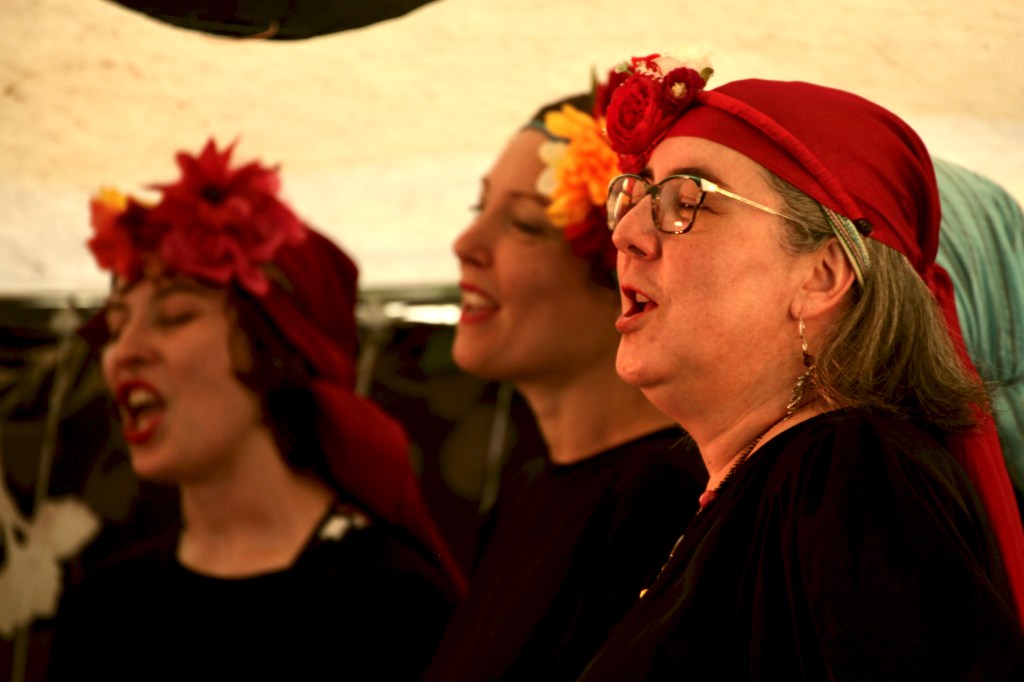
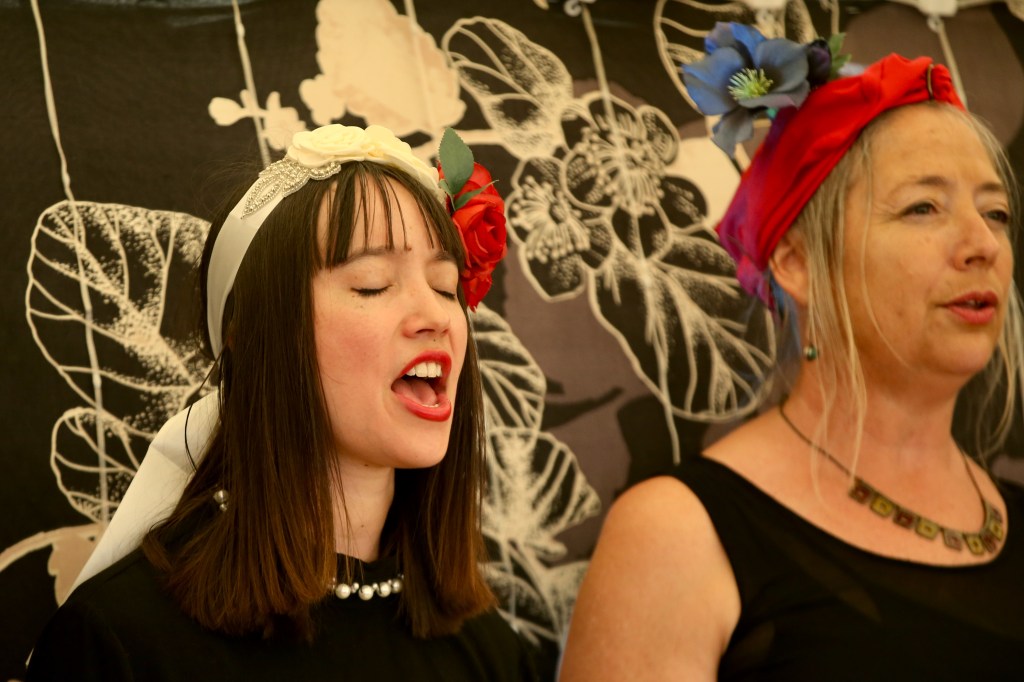
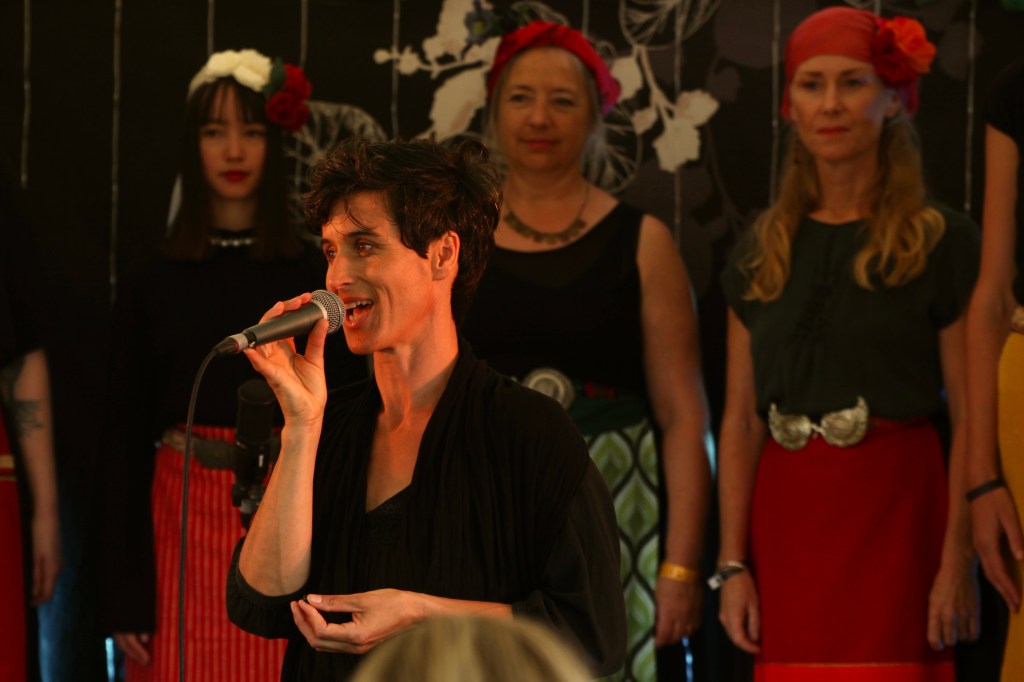
We were a triptych of ensembles – from New York, Yale and Aotearoa – each with their own repertoire, plus 3 combined pieces. Our long distance preparation served us well. After just a few rehearsals onsite, we’d found a common sound and interpretation thread, under the musical direction of Vlada Tomova (Yasna Voices). Our anticipation of the flexibility required to do so was proven true – it was ultimately an enriching experience to understand that the underlying musical values of each ensemble leader can vary greatly, despite common repertoire, and joining in service was of the essence.
On the day, the program ran well overtime and our 8pm slot became 11pm. Keeping our singers warm and patient, heartened by the phenomenal journey we had undertaken around the globe, our performance took place in near darkness, after the ‘nestinarki’ (ritual fire-walkers) had taken the square.

The earlier part of the evening had featured large ensembles from abroad, sometimes regrettably singing over backing tracks – which might please some festive audiences but definitely disappointed those ardent acapella craftswomen who understand how powerfully vulnerable is it to carry acapella music – particularly in smaller chamber ensembles like our octet – something we work tirelessly for.
As we came off stage we were complimented by other ensemble leaders’ enthusiasm “Are any of you Bulgarian? How is it possible that you sing like this!” It was my dream to at least cause some doubt. Many of the international ensembles are in fact spearheaded by Bulgarian natives, living abroad, like Dessislava Stefanova, who leads both the London and Swiss Bulgarian Choirs, and Nina Wasilewa-Zanechev, who leads the ensemble Kitka, in Vienna, Austria – both utterly brilliant choral leaders.
Zdravka Dzhoreva-Peneva of the Bistrishkite Babi’s Granddaughters, appreciates what we do. Our ‘neizvesten’ (not famous) repertoire, the integrity of our sound and the heartfulness of our waiata. (It was very special to spontaneously feature a song outside the planned Bulgarian repertoire, being our arrangement of Purea Nei, which I wrote for my father, with a special unspoken dedication to Gabrielle Young, who passed just a few months ahead of a trip that she would have adored and shone in.)
I had met Zdravka in her home village of Bistritsa the week before, after a wonderful workshop with Dina Koleva – the leader of the 200 person strong collective of community ensembles. The film by Vlada Tomova that we celebrated that evening featured the Babi’s work in the context of Martha Forsyth’s phenomenal ethnomusicological contribution in the realm of women’s village song in Bulgaria (she gathered the lifetime repertoire of Baba Linka in a book called “Listen Daughter, and remember well”).

In a treasured moment, we had sung the Bistritsa Babi one of their own songs, which I had studied years before – apparently one of the most intricate. At Koprivshtitsa, Zdravka waited through the night to hear us perform. As the general crowd dwindled, the dedicated lovers of Bulgarian song remained. Some weeks later I was invited to her home for a traditional meal and laden with stories, music resources and costumes of encouragement, as our young boys played with the father, Plamen. Health and Flame.
Back in Koprivshtitsa, the beautiful old wooden house held 21 singers (another house nearby had 17). With local kai a volonté, wine and rakiya, with so many rehearsals in the courtyard, we certainly made memories. Perhaps our hosts did too, as I’m quite sure I saw tears in their eyes as we waved goodbye.
The winding roads to Smolyan tested stomachs, and my son, sitting up front of the bright red 40 seater bus, made new friends with those who are prone. Smolyan – the stronghold of Rodopa music education – is nestled in imposing mountains, which surely inform the broad, resilient personalities we encountered there. Stunning singers and gaida (the Bulgarian bagpipe which welcomes you to the house like a karanga). Women sang, barely afloat above the tonitruante gaida – a kind of fierce duel provocation for the singer to resound as loudly as a bagpipe. Their luminous leader Fidan Merov burst into song at the table afterwards with Rufinka Bolna Legnala. I confessed I had studied it, but didn’t have the local power. He replied, there is power in delicacy. So I closed my eyes and sang for the fallen maidens.
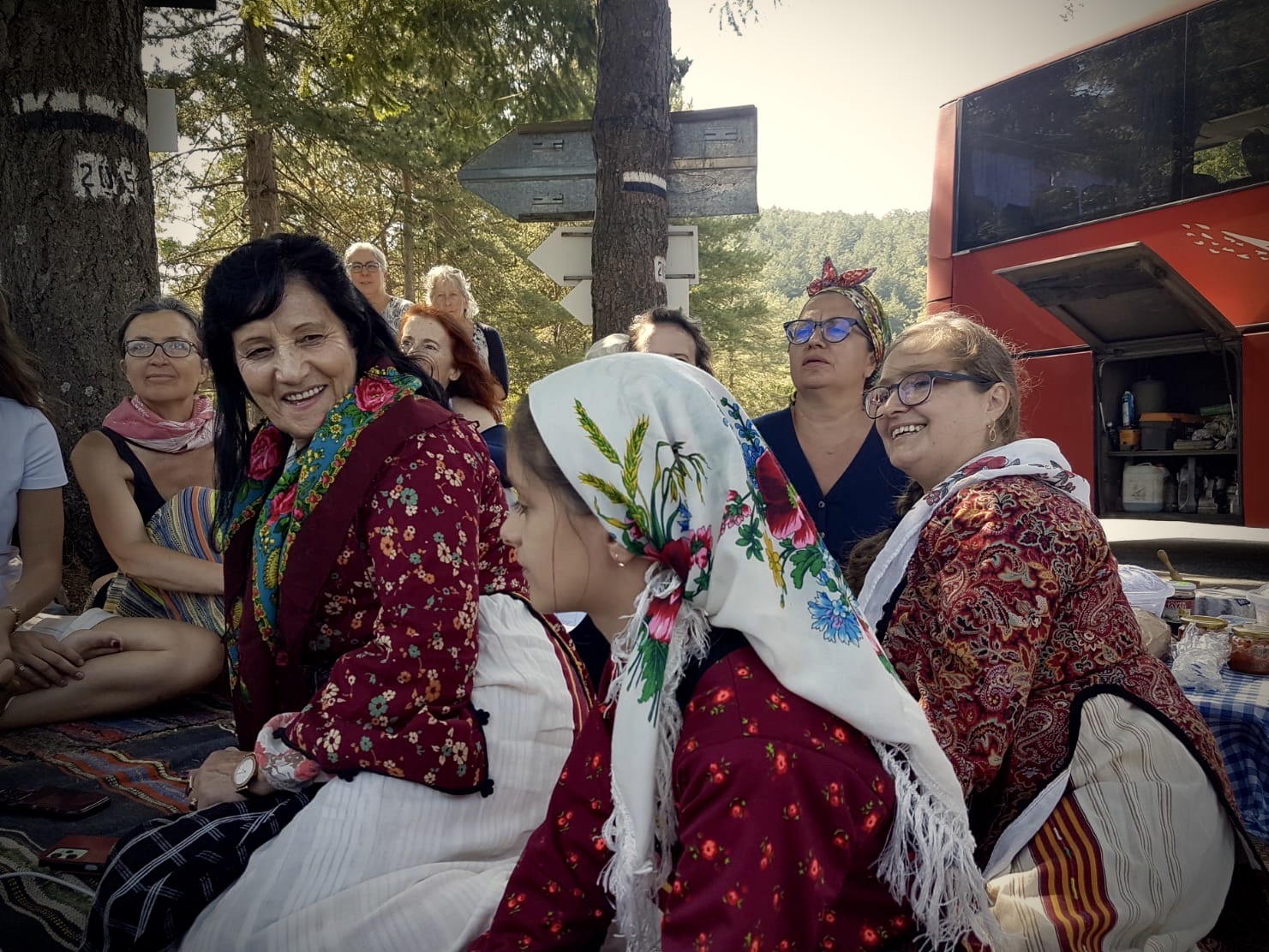
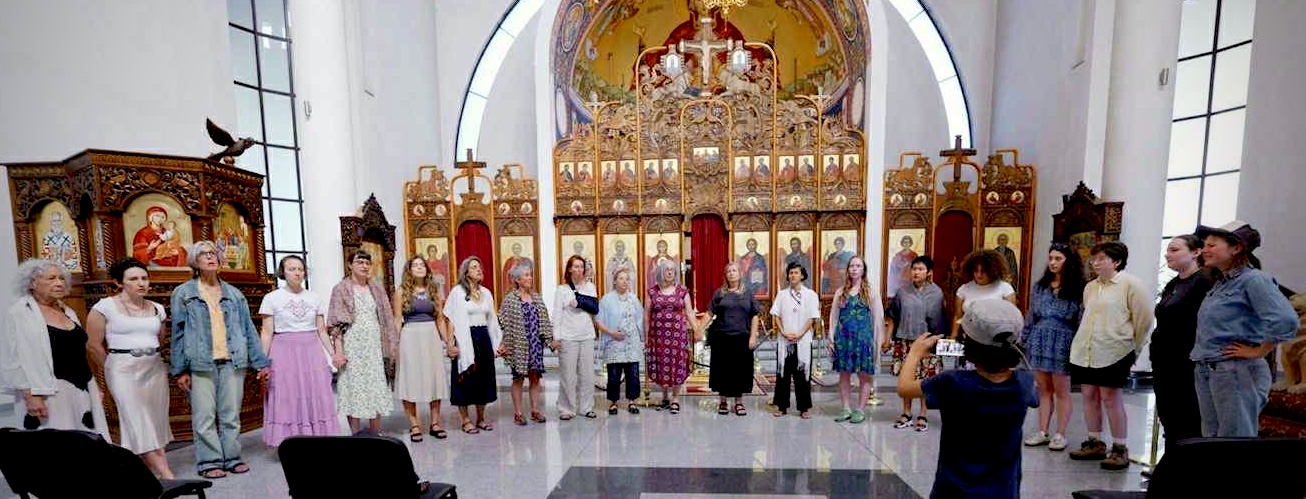
In nearby Nedelino – known for its utterly unique two part songs, where the voices interlace – we were welcomed by Lidia Hadzhieva and her delightful singing family. An utterly memorable homemade feast on a hilltop beneath the pines, turned Sedyanka (sitting bee) for the transmission of diphonic song, on colourful woven blankets. These encounters were part of Vlada Tomova’s cultural immersion tour. Her project, in part documentary, had us dropping into a church to sing, village songs, Orthodox prayer, and finally a collective improvisation, interweaving the minds and voices of the three travelling ensembles.
Often, the bus would be brimming with song, with different ensembles overlapping. Sometimes they were songs we had just learned, sometimes the famous favourites – which somewhat bored me. Here to learn new things, I found my equal in pursuit of timbre and repertoire in the lone traveller Makiko Ijiri from Japan, with whom I sang a Graovo duet on the Nevestite cliff tops in Smolyan. The emotion was high here as the location is named for the brides that leapt to escape their forced religious conversion.

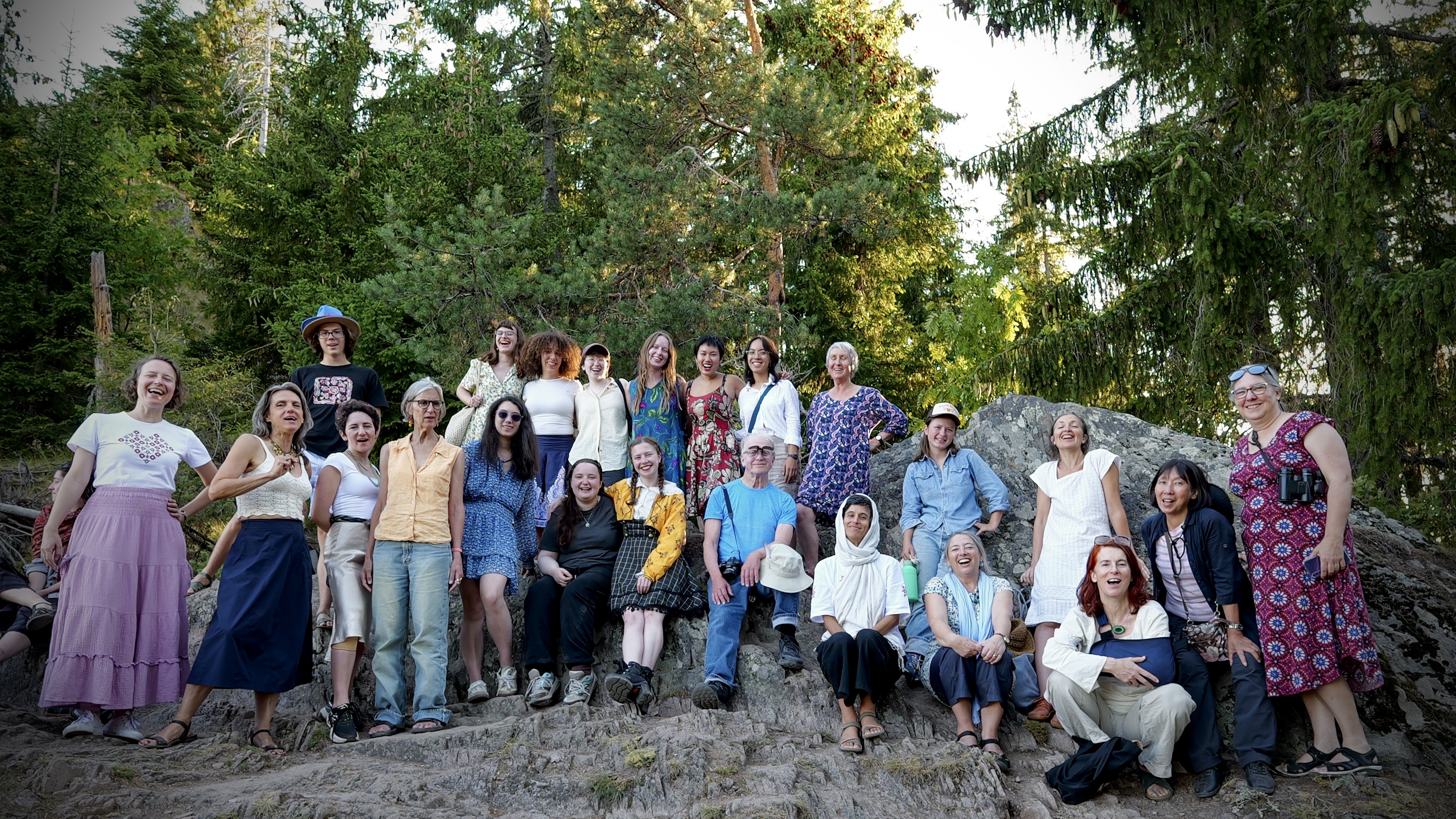
We concluded the combined tour with a celebration for 87yr Yanka Rupkina. My 6yr old son calls her “that queen who came to dinner”. With a lifetime of worldly musical adventures, the glint in her eye outshone her now quiet voice, and after listening to her beautiful stories, it was an honour to wrap around her to sing. On this trip I encountered many elder bodies, becoming light, frail, brittle, and was often reminded of my father – of how an artist can carry such riches of experience and potency for transmission, but that ultimately that the body will depart, and that all that has not been transmitted to the living returns to the great void. For another blog…
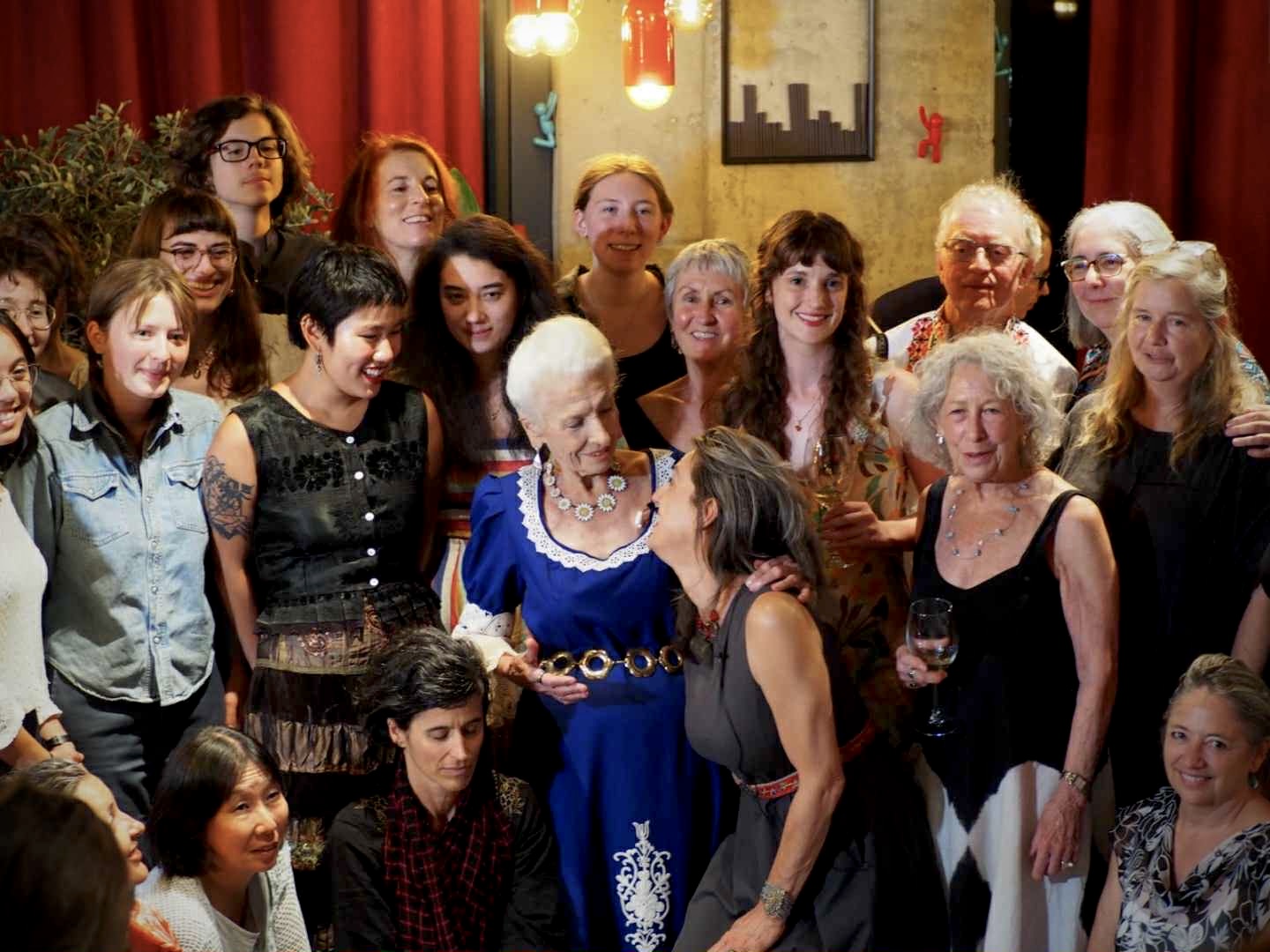
Ahead of this collaborative tour I had designed a sequence of intimate group lessons for my Medena singers around Sofia and Plovdiv, with some my very favourite teachers:
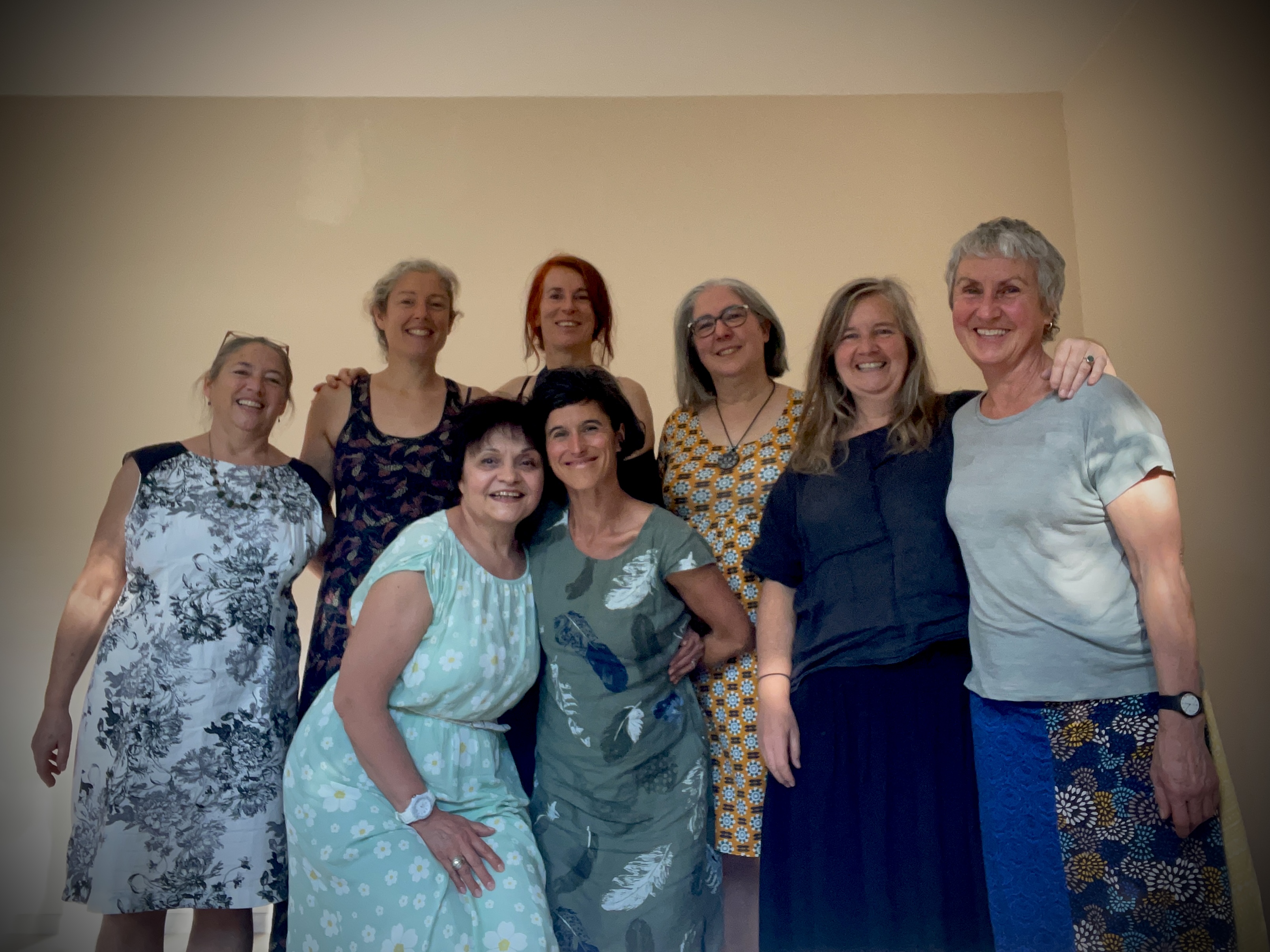
- Elichka Krastanova, my first teacher, one of the rare contra altos in LMVB, daughter of Nadejda Hvoineva, carrier of the most exquisite low resonance, matching her broad Rodopa mountain heart.
- Gergana Dimitrova, the powerful and gracious soprano of Eva Quartet, also in LMVB, who shared a beautifully ornamented song from her native Severna Oblast (North Western Bulgaria).
- Diyana Vasileva, a young Graovo singer stepping in for Radka Aleksova, who regrettably has not the breath to sing after a recent heart operation. With Diyana we explored the open throated Graovo Tresene oscillations – a vocal technique so different to what we know, that it called on our bravery.
- Svetla Stanilova, my long standing vocal mentor from the Plovdiv Academy, who thinks I have done a rather fine job training my girls, and that we should enter a foreigners folklore competition (!)
- Dora Hristova, whom I finally managed to reach after the groups departure, and whom I interviewed for a couple of hours of fascinating conversation about acapella interpretation, micro-tuning to temperatures, and managing a world class cluster of rather different voices in a single ensemble for so many years. She has recently retired from leading “Le Mystère des Voix Bulgares” and she misses it as much as we miss her in their performance – which for decades was sublimed by her aural vision and speaking hands.

Post tour, I lingered in the Pirin mountains with my son, effectively waiting for the Nedelino Dvuglas (two voiced) Festival, where we were due to stay with our new dynamic teacher, Aneta Emilova. I had transcribed live performance audio of her ensemble performing in France many years ago. Putting a face to the sound is very affirming – just the kind of encouraging magic we need to continue this ‘lyubitelni’ (lovers of) life long musical journey. Unfortunately the political situation in France forced us to move our return flights forward and we missed the festival. One of our singers was able to attend and discovered there was in fact very little authentic “dvuglas” content in the program. Perhaps the organisers are looking to draw crowds, but such a treasure should be given its UNESCO protection due. Our teachers Lidia and Aneta said they are now very few to be carrying this living tradition. My hope is that Medena Ensemble, from across the globe, could be of assistance in supporting the appreciation of this unique art, and to our best ability, actually practicing it by keeping the repertoire alive, (our first workshops of the season is dedicated to Nedelino).
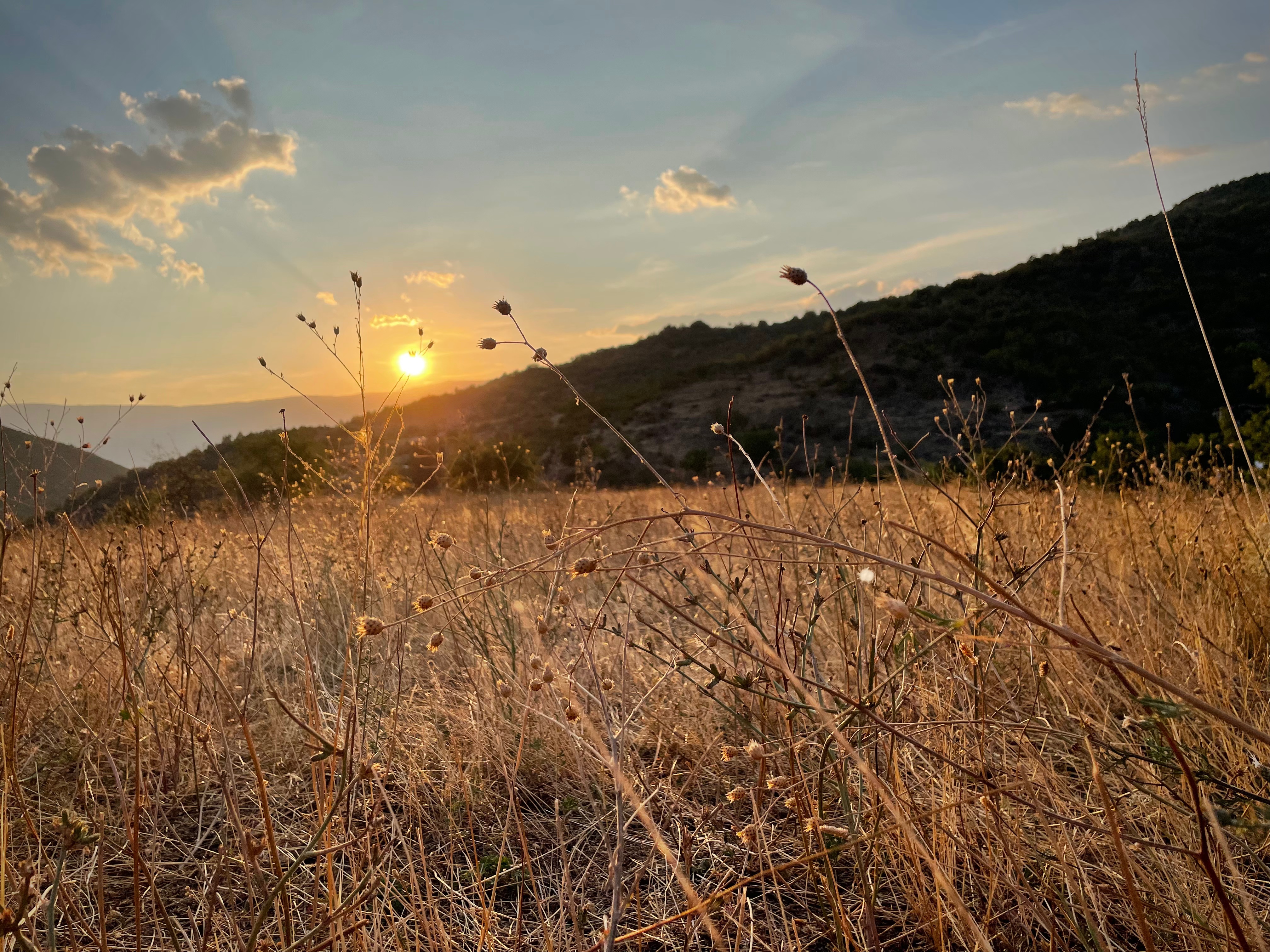
Back in Aotearoa, I pour through recordings and notes, and begin to refine the field transcriptions which will define the next arc of Medena Ensemble performance repertoire. These unique pieces, thankfully all encountered in person, are so distinguished from the multitudes of folklore recordings found online. They sit in our kete, like freshly collected wild herbs, each with their particular medicinal properties, an innate power and a demand for reverence in the handling.
I have chosen 6 pieces for Medena Ensemble’s 2025 springtime season. Each workshop is standalone and actually open to singers from the outside. Please get in touch if you are interested in experiencing some of this vocal work. *Note that singers require some folklore vocal experience, or an individual introduction session, to cover the basics of the voice production ahead of the ensemble workshop.
MEDENA ENSEMBLE 2025 SPRINGTIME SERIES _ OPEN WORKSHOPS
4 OCT : NEDELINO village
= Potent diphonic mountain song, learned with Aneta Emilova
5 OCT : BISTRITSA village
= Driving diphonic trance-lore, learned with Dina Koleva
1 NOV : PLEVEN region
= Swift ornamented 7 rhythm, for trio, learned with Gergana Dimitrova
2 NOV : PIRIN region
= Beautiful slow 7 rhythm, for trio, learned with Gergana Dimitrova
29 NOV : RODOPI mountains
= Uplifting frolic song, for trio, learned with Elichka Krastanova
30 NOV : RODOPI mountains
= Languorous ornamented solo, learned with Elichka Krastanova
ENQUIRIES : tuimamaki@gmail.com / 021 155 55 82





 TUi MAMAKi